


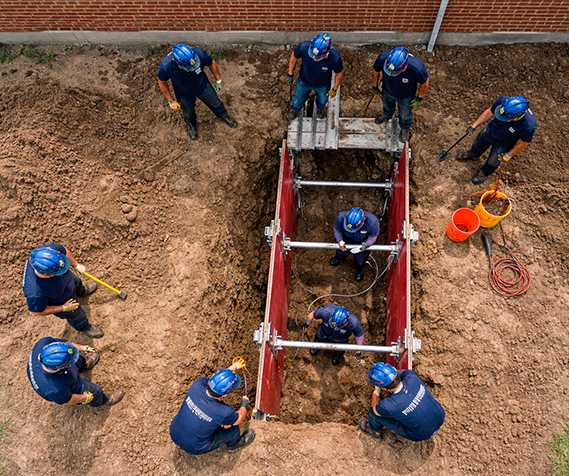
When a trench turns into a web of gas lines, water lines, and conduit, standard protection can get complicated fast. A rigid trench box may work on a straight run, but crossing utilities often call for a more adaptable solution. That is where KUNDEL hydraulic shoring jacks and the KUNDEL TrenShore Series stand out.
KUNDEL describes TrenchJack as a lightweight, OSHA-approved, versatile shoring system, and highlights features like its Big-Block Standoff for cleaner operation in dirt-heavy trench conditions.
1. Never leave the crossing point unprotected
The most dangerous part of a utility trench is often the exact spot where crews need to work. If a utility line crosses through the trench, that area still needs protection. Leaving an open gap because the trench is tight or awkward is not a safe solution.
2. Straddle the utility instead of fighting it
When working around intersecting pipes, the better approach is to position the shoring to work around the existing line, not force the system into it. That is one reason crews use hydraulic shoring for spot repairs and crossing utilities. It gives more flexibility when the trench does not follow a clean, open path. KUNDEL explicitly positions TrenchJack around versatility, productivity, and ease of use in the trench.
3. Protect the worker in the actual repair zone
Protection is not just about where the cylinders sit. The laborer exposing, tapping, or repairing the line must stay protected in the working bay too. Good trench safety planning focuses on where the task happens, not just where the equipment lands.
4. Use spot bracing to avoid damaging the existing line
A common mistake in utility work is transferring pressure into the pipe you are trying to protect. Spot bracing helps stabilize the trench wall without crushing or stressing the crossing utility. That matters on repair jobs where one bad setup can turn a routine fix into a bigger failure.
5. Choose a system that still works in mud and debris
This is where KUNDEL has a real advantage. On the KUNDEL TrenchJack page, KUNDEL explains that traditional small-block standoff designs can collect dirt in the rail connection, creating resistance and making the system harder to use. KUNDEL’s Big-Block Standoff is designed to let dirt fall through the connection so the system keeps running smoothly. That is a meaningful advantage when crews are trenching around muddy utilities and need to keep adjusting the shore.
Why crews choose hydraulic shoring over trench boxes in utility-heavy trenches
A trench box still has its place on straight, open runs. But when the trench gets crowded with crossing lines and intersecting pipes, hydraulic shoring gives crews more flexibility, more control, and a better chance of keeping the repair zone protected without slowing the job down. KUNDEL markets both trench boxes and hydraulic trench shoring for sewer and waterline maintenance and repair applications.
Don’t let crossing lines stop your job. Explore KUNDEL hydraulic shoring systems built for utility-heavy trench work.