The equipment arrives. The installation is scheduled. Production is ready. Then someone discovers the lift doesn't reach the machine. The gripper can't hold the part. Or the system can't keep up with the production cycle. Now you're spending more...
KUNDEL Blogs
Production Safety Equipment for the Working
Class Above & Below Ground
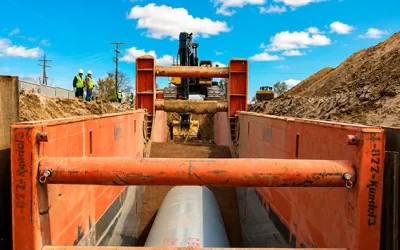
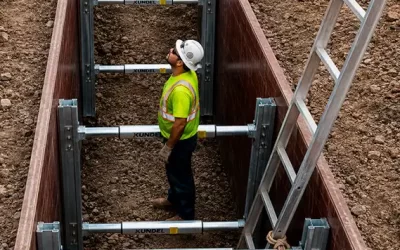
Trench Box End Protection: OSHA Requirements and Field Solutions
Your crew is inside the trench box. The sidewalls are protected. Everything looks secure. But what about the open ends? A trench shield can protect workers from collapsing sidewalls while leaving them exposed to soil falling or sliding into the box...
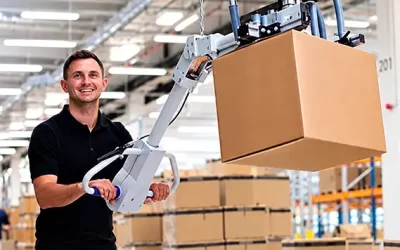
Reducing Workers’ Comp Costs Through Ergonomic Lift Assist Programs
A lifting injury does not stop costing a manufacturer when the medical claim is paid. Lost production time, overtime, temporary labor, retraining, administrative work, and future insurance costs can all add to the financial impact. That is why...
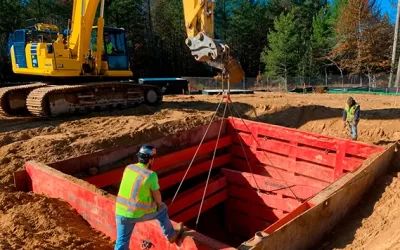
Demystifying Trench Box Depth Ratings: PSF, Soil Types, and Safety Factors
A trench box does not have one universal maximum depth. Its allowable depth depends on soil conditions, trench depth, surcharge loads, and the manufacturer’s tabulated data. A box that can be used deeper in stable soil may have a much lower...
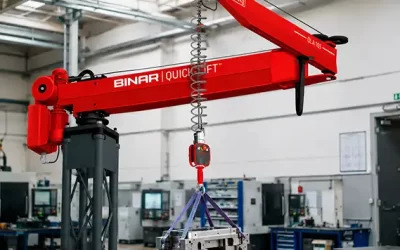
Pneumatic vs. Electric Zero-Gravity Balancers: Which Technology Fits Your Operation?
The biggest difference between a pneumatic and electric balancer is not what the operator feels. Both can make a heavy part feel nearly weightless. Both can reduce the effort behind repetitive lifting. Both can improve control at the workstation....
Exoskeletons vs. Lift Assist Devices: Which Technology Actually Reduces the Load?
Industrial exoskeletons get attention for a good reason. They are wearable, increasingly sophisticated, and can reduce physical demand during certain repetitive or awkward tasks. NIOSH research has found that some exoskeletons can reduce muscle...
Hydraulic Shoring Maintenance: Troubleshooting Leaks, Seals, and Pressure Drops
A hydraulic shore that will not hold pressure is not something to “see how it does” on the next job. It stays in the yard. For fleet mechanics, equipment managers, and shop foremen, hydraulic shoring maintenance comes down to a few failure points...
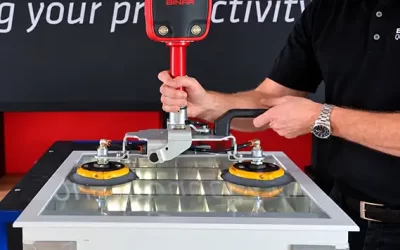
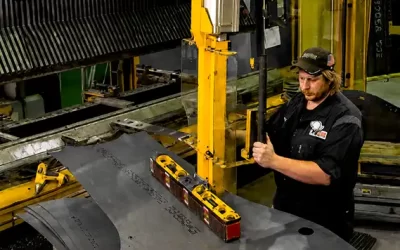
The Part Passed Inspection. Then Someone Picked It Up.
The coating was clean. The dimensions were in tolerance. The surface passed inspection. Then the part was lifted, shifted, rotated, and placed into the next fixture. That is where the scratch appeared. Manufacturers invest heavily in controlling...
Sunshine, Laughter, and a Day With the KUNDEL Family
We recently traded the workday for sunshine at our company picnic at Pioneer Waterland. Employees and their families spent the day racing down water slides, floating along the lazy river, playing mini golf and cornhole, riding go-karts, and...