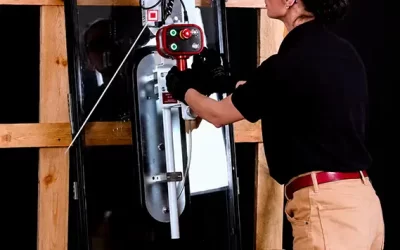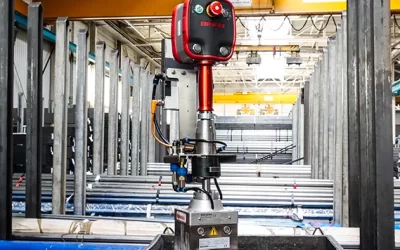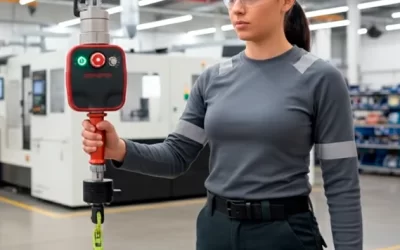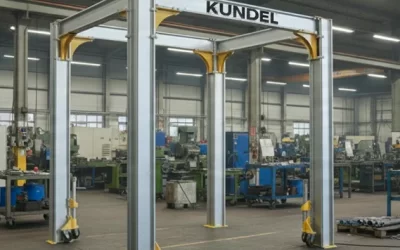
A lifting injury does not stop costing a manufacturer when the medical claim is paid. Lost production time, overtime, temporary labor, retraining, administrative work, and future insurance costs can all add to the financial impact. That is why...
Balancers BLOG
Pneumatic vs. Electric Zero-Gravity Balancers: Which Technology Fits Your Operation?
The biggest difference between a pneumatic and electric balancer is not what the operator feels. Both can make a heavy part feel nearly weightless. Both can reduce the effort behind repetitive lifting. Both can improve control at the workstation....
Exoskeletons vs. Lift Assist Devices: Which Technology Actually Reduces the Load?
Industrial exoskeletons get attention for a good reason. They are wearable, increasingly sophisticated, and can reduce physical demand during certain repetitive or awkward tasks. NIOSH research has found that some exoskeletons can reduce muscle...
The Part Passed Inspection. Then Someone Picked It Up.
The coating was clean. The dimensions were in tolerance. The surface passed inspection. Then the part was lifted, shifted, rotated, and placed into the next fixture. That is where the scratch appeared. Manufacturers invest heavily in controlling...
Vacuum vs. Mechanical vs. Magnetic Grippers: Choosing the Right End Effector
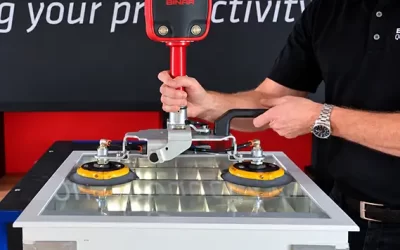
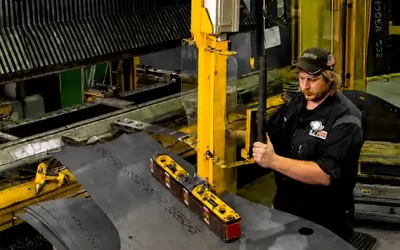
Choosing the right lift assist system starts with one practical question: How should the equipment actually grip the part? The crane, jib arm, or balancer moves the load. The end effector secures it. That makes the gripper one of the most important...
How to Build a Business Case for Lift Assist Devices: ROI Framework for Plant Managers
Manual lifting problems rarely show up as one clean line item. They spread across workers’ compensation claims, absenteeism, turnover, slowed production, product damage, rework, and labor inefficiency. That is why lift assist devices for...
Semi-Automation vs Full Automation: When Supporting Workers Matters More Than Replacing Them
Why This Decision Comes Up in Material Handling In many facilities, automation becomes part of the conversation during growth, safety reviews, or when teams are asked to move heavier loads more efficiently without increasing risk. In material...
Stop Rebuilding Your Tech Stack: The Zero-Disruption Guide to Semi-Automation
The Reality Facing Manufacturers Today Automation is no longer optional. Safety expectations are higher, labor is tighter, and consistency matters more than ever. At the same time, most manufacturers don’t have the margin for extended downtime,...
The Low-Disruption, High-Impact Automation Move That Pays Back Fast
(How KUNDEL’s K-TRAC, I-STRUT, and Lift-Assist Systems Raise Throughput Without Overhauling Your Floor) Why Semi-Automation Is the Upgrade Most Shops Say “Yes” To Shops turn to semi-automation because it addresses problems that show up every single...