


A new report from the American Water Works Association estimates that U.S. drinking water systems may need $2.1 trillion to $2.4 trillion in investment over the next 25 years.
That is a big national number.
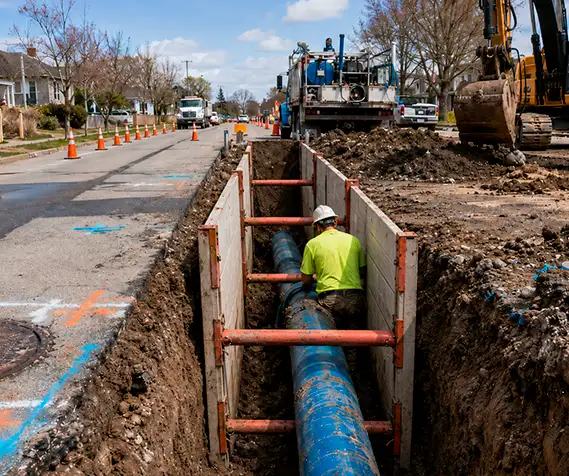
But for public works teams, utility contractors, and municipal crews, it eventually becomes something much more practical: a street cut, an open trench, a broken main, and a crew hat needs to get the job done safely.
Big Infrastructure Plans Eventually Hit the Jobsite
Water infrastructure conversations usually start with funding, policy, and long-range planning. That all matters, but the real work happens in less polished conditions.
A water main does not wait until the rental yard opens. A downtown repair does not come with unlimited space. A utility corridor does not clear itself just because the job would be easier without crossing lines, traffic control, changing soil conditions, or aging infrastructure already in the way.
This is the part of the conversation that deserves more attention.
If the country is going to repair, replace, and modernize buried water infrastructure at this scale, crews need trench safety planning that matches the work they are actually facing.
The Right Protective System Depends on the Repair
There is no one-size-fits-all answer in trench safety.
The right system depends on the trench, the soil, the depth, the equipment available, and the kind of work being done.
For tight utility repairs, hydraulic shoring can make sense because crews are often working around existing lines or in places where a standard trench box does not fit cleanly.
For everyday municipal water, sewer, and storm repairs, aluminum trench boxes can offer a strong balance of protection, portability, and long-term value. They are especially practical for departments working with smaller machines, limited storage space, and recurring repair needs.
For deeper, heavier, high-production excavation, steel trench shields are built for tougher conditions where strength, depth rating, and durability become the deciding factors.
The point is not to pick the biggest system or the cheapest system.
The point is to pick the right system before the crew is standing at the edge of the trench trying to make the wrong one work.
Readiness Is Where the ROI Shows Up
For municipalities, trench safety is not just a compliance line item. It is part of emergency readiness.
When a main breaks at 2 a.m., the value of owning the right equipment becomes very clear.
Crews can respond faster. Training is more consistent. Equipment is available when it is needed. And the department is not depending on rental availability during peak season or after-hours emergencies.
Renting still has its place, especially for occasional or unusual jobs. But for cities, utilities, and contractors doing frequent excavation work, owning trench safety equipment can be a smarter long-term move.
It gives teams more control over cost, timing, safety, and response.
That matters in an era where infrastructure budgets are under pressure and every hour in the field counts.
A Smarter Infrastructure Future Starts Below Grade
The AWWA report makes one thing clear: America’s water infrastructure challenges are not going away.
The work is coming through planned upgrades, emergency repairs, replacement projects, and long-term resilience planning.
The question is whether crews will be equipped for the reality of that work.
At KUNDEL, we build trench safety solutions for the conditions municipal and utility teams know well: tight streets, aging systems, crossing utilities, emergency timelines, limited equipment, and the constant need to protect the people doing the work.
Because rebuilding water infrastructure is not just about what goes underground.
It is about making sure the crews who get us there go home safe.
Build Your Trench Safety Plan Before the Next Repair
Whether your crew is preparing for emergency water main repairs, recurring utility work, or larger infrastructure replacement projects, KUNDEL can help you match the right trench safety system to the job.
Explore KUNDEL trench safety solutions built for municipal, utility, and infrastructure work.