


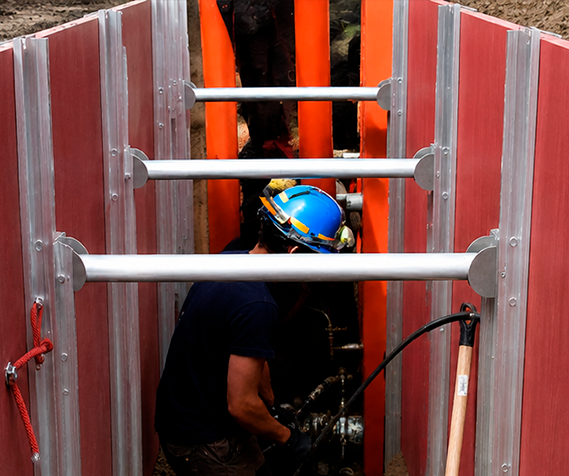
Hydraulic shoring jacks usually get evaluated when the clock is already running.
The job is scheduled. The trench is coming. Someone is checking rental availability, comparing rates, and trying to make the safest decision without slowing the crew down.
Renting can absolutely make sense.
But for contractors who handle frequent utility repairs, plumbing excavation, municipal work, or tight trench jobs, the better question is not just: What does it cost to rent?
It is: How often are we paying for the same capability?
When Renting Makes Sense
Renting hydraulic shoring jacks is often the right move for short-term or occasional work.
If the job only lasts a few days or weeks, renting keeps the upfront cost low. It also removes the burden of long-term storage, maintenance, and repairs.
Renting may be the smarter choice when:
- The project is short
- Trenching work is occasional
- You need a special size or configuration
- You do not have space to store equipment
- You want the rental provider to manage maintenance between uses
For contractors who only need it once in a while, renting keeps things simple.
When Buying Starts to Pay Off
Buying starts to make sense when hydraulic shoring becomes part of your normal work.
If your crews are regularly opening trenches for utility repairs, service lines, spot repairs, or municipal jobs, ownership gives you more control over timing and availability.
That matters.
A rental system is only useful if it is available when your crew needs it. During busy seasons or emergency work, waiting on equipment can slow the entire job before the trench is even protected.
Buying may be worth a closer look when:
- Your crews rent shoring jacks several times a year
- You handle emergency or after-hours repairs
- Rental availability causes delays
- You want crews trained on one familiar system
- You have the space and process to maintain the equipment
- You want equipment ready before the job demands it
In other words, renting gives flexibility. Buying gives control.
The Simple Cost Check
You do not need a complicated spreadsheet to start the conversation.
Start here:
Annual rental cost = (rental rate × rentals per year) + delivery/pickup fees + cost of project delays
Then compare that against:
Ownership cost = purchase price + maintenance + inspections/repairs + storage + cost of capital − resale value/depreciation benefit
If your annual rental spend keeps climbing, ownership may be the cleaner long-term move.
The real break-even point is not just financial. It is operational.
If owning hydraulic shoring jacks helps your crew respond faster, avoid scheduling delays, and work with equipment they already know, that value should be part of the decision.
Do Not Let Cost Pick the Wrong System
Cost matters, but it should never outrank the trench.
Hydraulic shoring jacks are often useful for narrow trenches, spot repairs, and areas with existing utilities. It can be a practical option where a trench box does not fit cleanly or where dragging heavier equipment to the site creates unnecessary delay.
But it is not the right answer for every excavation.
The right protective system depends on soil conditions, trench depth, trench width, surrounding loads, and manufacturer tabulated data. Contractors also need to follow OSHA 1926 Subpart P requirements for excavation and trench protection.
Safety is not where the budget should get clever.
The Bottom Line
Rent when the job is short, unusual, or infrequent.
Consider buying when trench work is recurring, rental delays are becoming normal, or emergency response is part of your business.
The best decision is the one that gives your crew the right equipment, at the right time, for the trench they are actually working in.
KUNDEL’s hydraulic shoring jacks are built for contractors who need portable, practical trench safety equipment that is ready when the work is.
If your rentals are starting to look like a pattern, it may be time to run the numbers.
Get an Equipment Fit Check
Not sure whether renting or buying makes more sense for your crew?
KUNDEL can help you review the type of trench work you handle, how often you need shoring, and which hydraulic shoring setup fits your jobsite conditions.
Explore KUNDEL Hydraulic Shoring Jacks or contact the KUNDEL team for an equipment fit check before your next project.