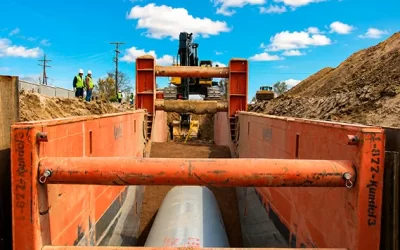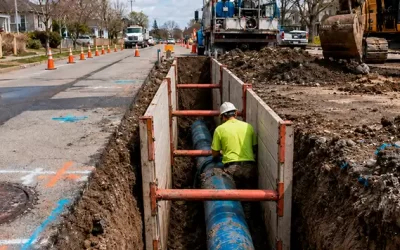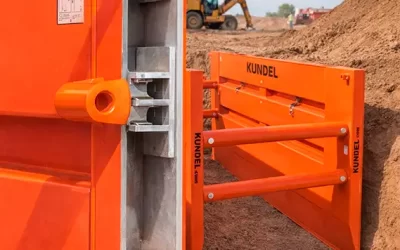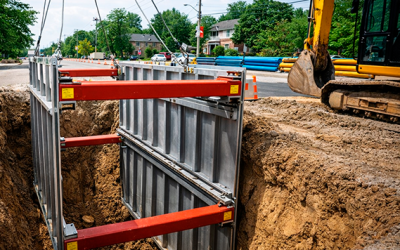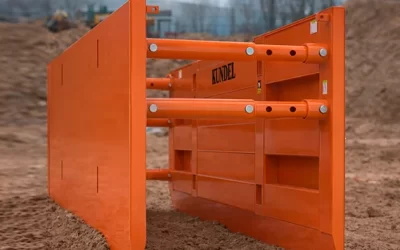
A trench box does not have one universal maximum depth. Its allowable depth depends on soil conditions, trench depth, surcharge loads, and the manufacturer’s tabulated data. A box that can be used deeper in stable soil may have a much lower...
Trench Boxes BLOG
Deep Trenching Safety: Best Practices for Stacking Trench Boxes
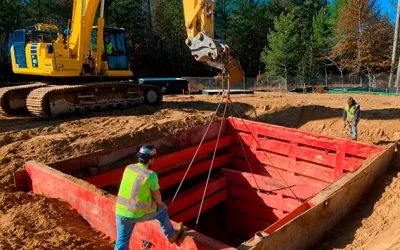
Deep trench work does not reward shortcuts. When excavations reach 16, 20, or more feet deep, crews often need to stack trench boxes to create a protected work zone for sewer, utility, and heavy civil applications. On paper, the concept is simple:...
Slope It, Shore It, Shield It: What KUNDEL Took From Cincinnati’s Trenching Safety Summit
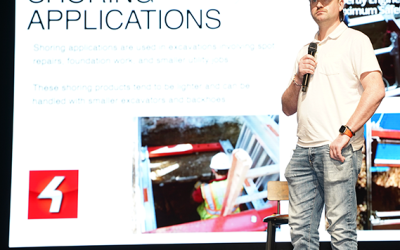
On April 15, 2026, contractors, safety professionals, and heavy civil construction crews gathered in Cincinnati for the “Slope It, Shore It, Shield It” Trenching and Excavation Compliance Summit. The free in-person seminar, organized by the OSHA...
America’s Water Infrastructure Needs Are Growing. Is Your Trench Safety Plan Ready?
A new report from the American Water Works Association estimates that U.S. drinking water systems may need $2.1 trillion to $2.4 trillion in investment over the next 25 years. That is a big national number. But for public works teams, utility...
Cast Sockets vs. Welded Sockets: Why the Spreader Socket Decides Trench Box Life
Most trench box failures do start at the spreader socket. That is the part taking repeated force from dragging, resetting, loading, and everyday production use. It is also the area most likely to crack when the design relies on a welded socket. For...
Urban Excavation Checklist: 5 Things to Look for in a Shoring System
Urban excavation has a habit of humbling the wrong equipment. A trench can look manageable on the print, then turn complicated the second the street narrows, utilities stack up, or the crew loses room to work. That is why the best shoring system...
The “Drag-Ahead” Technique: Increasing Pipe Installation Cycles with KUNDEL Titan Trench Boxes
On a production pipe job, the trench box should not slow the crew down. The cycle is simple: excavate, lay pipe, pull the box ahead, backfill, and repeat. But when crews are dragging a trench box that is not designed for forward movement, every...
Rent vs. Buy: When Should Municipalities Invest in Their Own Aluminum Trench Boxes?
Municipalities don’t buy equipment the way private contractors do. You’re balancing use-it-or-lose-it budgets, public accountability, and the reality that emergencies do not RSVP. That’s why the search term rent vs buy trench box is so common for...
Everyone Goes Home – Here’s What That Actually Means in the Trench
Why it matters: OSHA requires protection systems for trenches 5′ deep or more, and job-built shields without engineering are not acceptable.And when you choose a shielding solution like the KUNDEL Titan Series, those features become part of what...