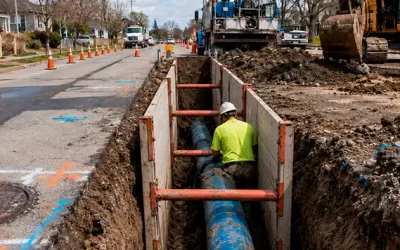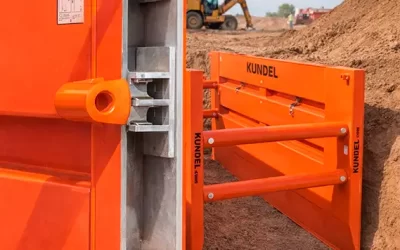
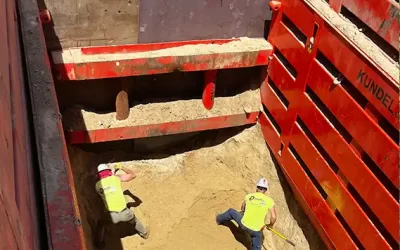
Deep trench work does not reward shortcuts. When excavations reach 16, 20, or more feet deep, crews often need to stack trench boxes to create a protected work zone for sewer, utility, and heavy civil applications. On paper, the concept is simple:...
KUNDEL Blogs
Production Safety Equipment for the Working
Class Above & Below Ground
Vacuum vs. Mechanical vs. Magnetic Grippers: Choosing the Right End Effector
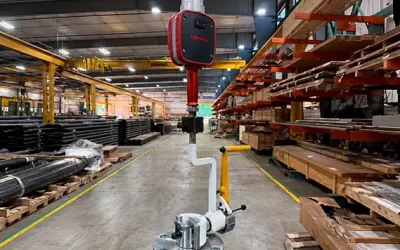
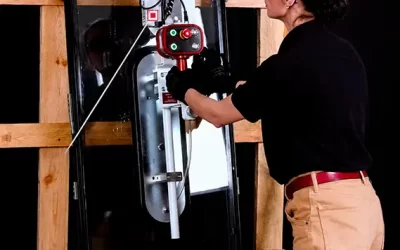
Choosing the right lift assist system starts with one practical question: How should the equipment actually grip the part? The crane, jib arm, or balancer moves the load. The end effector secures it. That makes the gripper one of the most important...
Slope It, Shore It, Shield It: What KUNDEL Took From Cincinnati’s Trenching Safety Summit
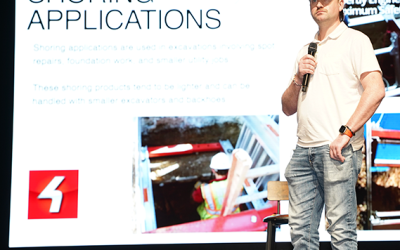
On April 15, 2026, contractors, safety professionals, and heavy civil construction crews gathered in Cincinnati for the “Slope It, Shore It, Shield It” Trenching and Excavation Compliance Summit. The free in-person seminar, organized by the OSHA...
The Injury Was Already in the Workstation
Every OSHA recordable has a backstory. Before the incident report, before the restricted duty, before the workers’ comp file, there is usually a workstation everyone already knows about. The lift is ugly. The reach is too far. The part has no good...
Renting vs. Buying Hydraulic Shoring Equipment: Cost Analysis for Contractors
Hydraulic shoring jacks usually get evaluated when the clock is already running. The job is scheduled. The trench is coming. Someone is checking rental availability, comparing rates, and trying to make the safest decision without slowing the crew...
America’s Water Infrastructure Needs Are Growing. Is Your Trench Safety Plan Ready?
A new report from the American Water Works Association estimates that U.S. drinking water systems may need $2.1 trillion to $2.4 trillion in investment over the next 25 years. That is a big national number. But for public works teams, utility...
How to Build a Business Case for Lift Assist Devices: ROI Framework for Plant Managers
Manual lifting problems rarely show up as one clean line item. They spread across workers’ compensation claims, absenteeism, turnover, slowed production, product damage, rework, and labor inefficiency. That is why lift assist devices for...
Cast Sockets vs. Welded Sockets: Why the Spreader Socket Decides Trench Box Life
Most trench box failures do start at the spreader socket. That is the part taking repeated force from dragging, resetting, loading, and everyday production use. It is also the area most likely to crack when the design relies on a welded socket. For...
Understanding Tabulated Data for Aluminum Hydraulic Shoring: A Contractor’s Guide
For many crews, tabulated data is where confidence disappears. The trench is open, the shore is on-site, and someone is staring at a chart trying to make sure the setup is right. But this is not just paperwork. If you are using aluminum hydraulic...